
COUZIN-FUCHS LAB
INSECT NEUROSCIENCE - FROM SENSING TO MOVEMENT
Department of Biology and the Centre for the Advanced Study of Collective Behaviour,
University of Konstanz, Insect neuroscience group
01/23
We study neural processing in social contexts. From sensory perception to action, alone and on mass.
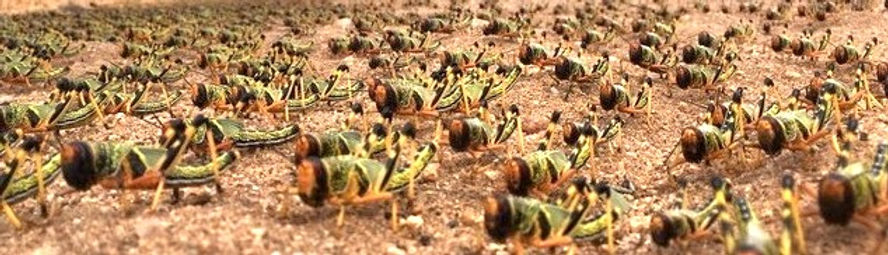
Desert locusts, Samburo County Kenya 2020
02/23
I'm a paragraph. Click here to add your own text and edit me. I’m a great place for you to tell a story.
03/23
Working together, cluster T-shirt, pre-COVID conferences, Kenya and a golden-nailed locust catcher.
RECENT NEWS
Hiring student assistants to join us,
Contact einat.couzin@uni-konstanz.de for details
20/10/2020
20 / 10 / 2020 16:55


We study neural processing in social contexts. From sensory perception to action, alone and on mass.
Desert locusts, Samburo County Kenya 2020
02/23
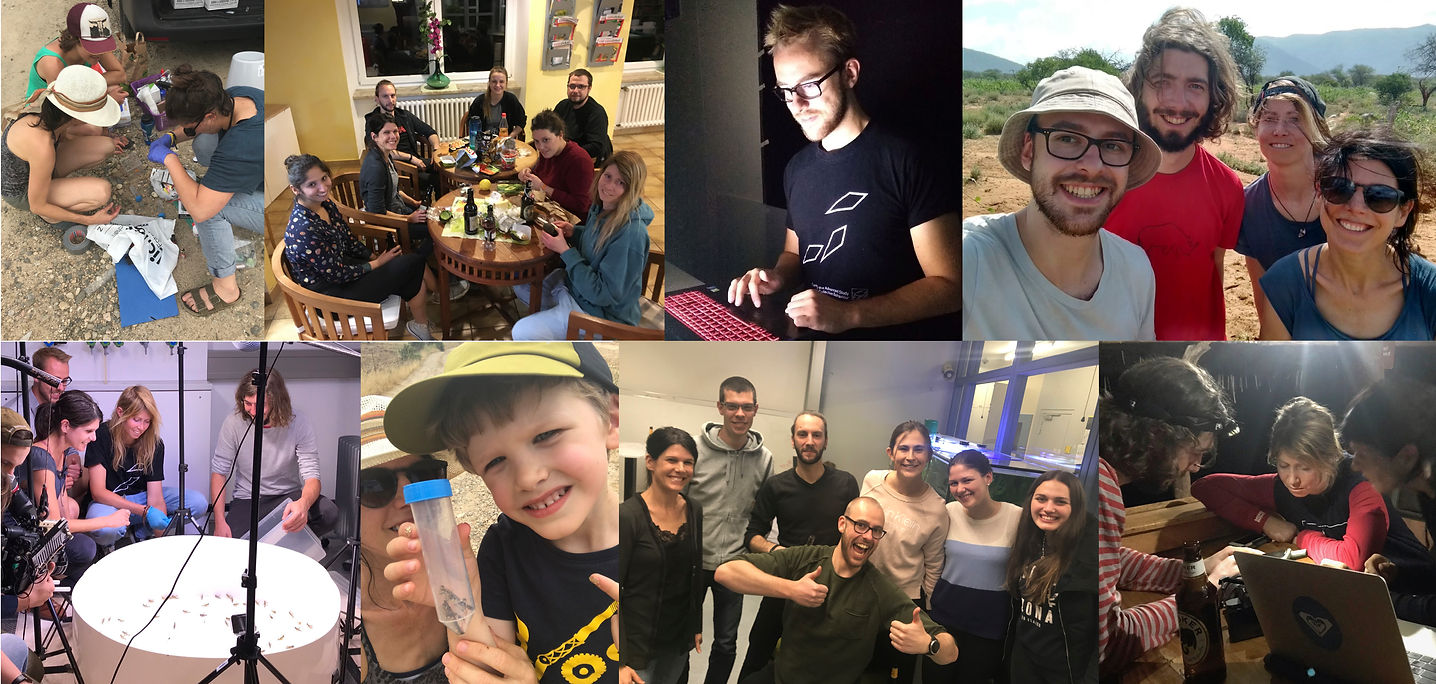
Working together, cluster T-shirt, @NWG, Kenya and a golden-nailed locust catcher.
RECENT NEWS
Hiring student assistants to join us,
Contact einat.couzin@uni-konstanz.de for details
20/10/2020

20 / 10 / 2020 16:55
Our locust research is on the big screen!
ARTE production Xenius featuring our work on locust swarms.
JOIN US FOR THE VIEWING PARTY - details soon

PROJECTS
FROM MOVEMENT TO SENSING: ACTIVE SMELLING
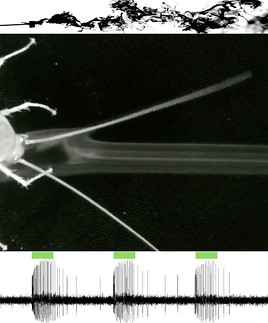
Compared to touch or vision, olfaction has long been seen as a passive sense. However, throughout the animal kingdom self-generated movement (e.g., sniffing, antenna movement, flight maneuvers) are used to bring new odorants to the olfactory organs. Using computer vision and electrophysiology we study the mechanisms by which insects sample their olfactory environment and make movement decisions.
Pequeno-Zurro A et al., 2018: Modeling active antennal movements of the American cockroach: towards biorobotic models of active sensing.
Collaborators:
FROM SMELLING TO MOVEMENT:
Olfactory coding and odour-driven movement decisions
We are interested in the neural representation and translation of odours to behavioural decisions in locusts and cockroaches. Using calcium imaging, intra- and extra- cellular recordings we are studying the neural representations of ecologically relevant olfactory signals in the primary olfactory centre - the antennal lobe as well as their translation into pre-motor commands.


COLLECTIVE MOVEMENT IN LOCUST SWARMS
Group behaviour result from interdependent feedback processes: individuals both influence, and are influenced by, one another. We are interested in how individual movement decisions affect group dynamics as well as how the group affects individual actions. Focusing on odour-driven behaviour, we are studying how social cues influence individual perceptual decisions in cockroaches and swarm-forming locusts.

UNDERSTANDING LOCUSTS
In a joint effort of the centre for the advanced study of collective behaviour and the Max Planck for animal behaviour we combine expertise to advance the understanding of locust swarms. Why and how do locust swarm? Where are they headed and how? Combining field observations, lab experiments, advanced automated tracking and behavioural characterisation are combined with neurophysiological recordings and pharmacological manipulations
LAB EXPERIMENTS
FIELD STUDY


CALCIUM IMAGING

Will they still know where to head after Inga's field manipulations?
Answers soon...
Co-labeling olfactory receptor neurons and projection neurons in the locusts antennal lobe
UNDERSTANDING LOCUSTS
In a joint effort of the centre for the advanced study of collective behaviour and the Max Planck for animal behaviour we combine expertise to advance the understanding of locust swarms. Why and how do locust swarm? Where are they headed and how? Combining field observations, lab experiments, advanced automated tracking and behavioural characterisation are combined with neurophysiological recordings and pharmacological manipulations
LAB EXPERIMENTS
FIELD STUDY

Will they still know where to head after Inga's field manipulations?
Answers soon...
CALCIUM IMAGING
Co-labeling olfactory receptor neurons and projection neurons in the locusts antennal lobe
READ MORE
OUR TEAM


EINAT COUZIN-FUCHS
ANTOINE HOFFMANN
Principal investigator
PhD Student
LOGAN
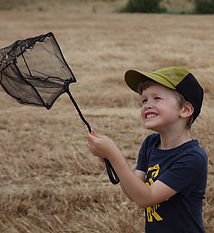
Sometimes a field assistant

INGA PETELSKI
PhD Student

YANNICK GÜNZEL
PhD Student


YVONNE HERTENBERGER
ALINA HEBLING
Research assistant
Research assistant

HANNAH HONNER
Student assistant
PUBLICATIONS
Günzel Y., McCollum J., Paoli M., Petelski I., and Couzin-Fuchs E (in review) Social modulation of individual preferences in cockroaches
Paoli M., Nishino H., Couzin-Fuchs E and Galizia G. (2020) Coding of odour and space in the hemimetabolous insect Periplaneta americana, J. Exp. Biol., 223(3).
Full volume 3D reconstruction of ascending and descending interneurons in the cockroach ventral nerve cord, Zeiss lsm980
Knebel D., Wörner J., Rillich J., Nadler L., Pflüger HJ., Ayali A. and Couzin-Fuchs E. (2018) Contralateral pathways allow the suboesophageal ganglion to modulate locusts’ inter-leg sensory-motor interactions. J. insect physiol., 107,116-124.
Pequeno-Zurro A., Nitschke J., Szyszka P., Shaikh D. and Couzin-Fuchs E. (2018) Modeling active antennal movements of the American cockroach: towards biorobotic models of active sensing. Artificial Life and Robotics, In 2nd International Symposium on Swarm Behavior and Bio-Inspired Robotics.
Couzin-Fuchs E., Gal O., Holmes P. and Ayali A. (2015) Differential control of temporal and spatial aspects of cockroach leg coordination. J. insect physiol. 79: 96-104.
Ayali A., Borgmann A., Büschges A. Couzin-Fuchs E., Daun-Gruhn S. and Holmes P. (2015) The comparative investigation of the stick insect and cockroach models in the study of insect locomotion. Curr. Opin. Insect Sci. 12: 1-10.
Couzin-Fuchs E., Kiemel T., Gal O., Ayali A. and Holmes P. (2015) Intersegmental coupling and recovery from perturbations in freely-running cockroaches. J. Exp Biol. 218: 285-297.
Ayali A., Couzin-Fuchs E., David I., Gal O., Holmes P., Knebel, D. (2015) Sensory feedback in cockroach locomotion: current knowledge and open questions. J Comp Physiol A, doi 10.1007/s00359-014-0968-1.
Fuchs E., Holmes P., David I. and Ayali A. (2012) Proprioceptive feedback reinforces centrally-generated stepping patterns in the cockroach. J. Exp. Biol. 215, 1884-1891.
Fuchs E., Ayali A., Kiemel T. and Holmes P. (2011) Intersegmental coordination of cockroach locomotion: adaptive control of centrally coupled pattern generator circuits. Front. Neural Circuits 4: 125.
Fuchs E., Ayali A., Ben Jacob E. and Boccaletti S. (2009) Formation of Synchronization Cliques During Development of Modular Neural Networks. Phys. Biol. 6: 1-12.
Fuchs E., Ayali A., Robinson A., Hulata E. and Ben Jacob E. (2007) Co-emergence of regularity and complexity during neural network development. Dev. Neurobiol. 67(13): 1802-1814.
Ayali A., Fuchs E., Hulata E.and Ben Jacob E. (2007) The function of inter segmental connections in determining temporal characteristics of the spinal cord rhythmic output. Neuroscience 147, 236-246.
Fuchs E., Ayali A. and Ben-Jacob E. (2006) Adult and sex-specific behavior can be characterized by motor patterns' functional complexity. Neuroreport 17: 1153-1158.
Ayali A., Fuchs E., Zilberstein Y., Robinson A., Shefi O., Hulata E. , Baruchi I., and Ben-Jacob E. (2004) Contextual regularity and complexity of neuronal activity: from stand-alone cultures to task-performing animals. Complexity 9.6, 25-32.
Zilberstein Y., Fuchs E., Hershtik L. and Ayali A. (2004) The modulation for behavior in the locust frontal ganglion. J. Comp. Physiol. A. 190: 301-309.
Ayali A., Fuchs E. and Kutsch W. (2004) Neurophysiological studies of flight-related density-dependent phase characteristics in locusts. Acta Biologica Hungarica 55, No 1-4.
Fuchs E., Kutsch W. and Ayali A. (2003) Neural correlates to flight-related density-dependent phase characteristics in locusts. J. Neurobiol. 57: 152-162.